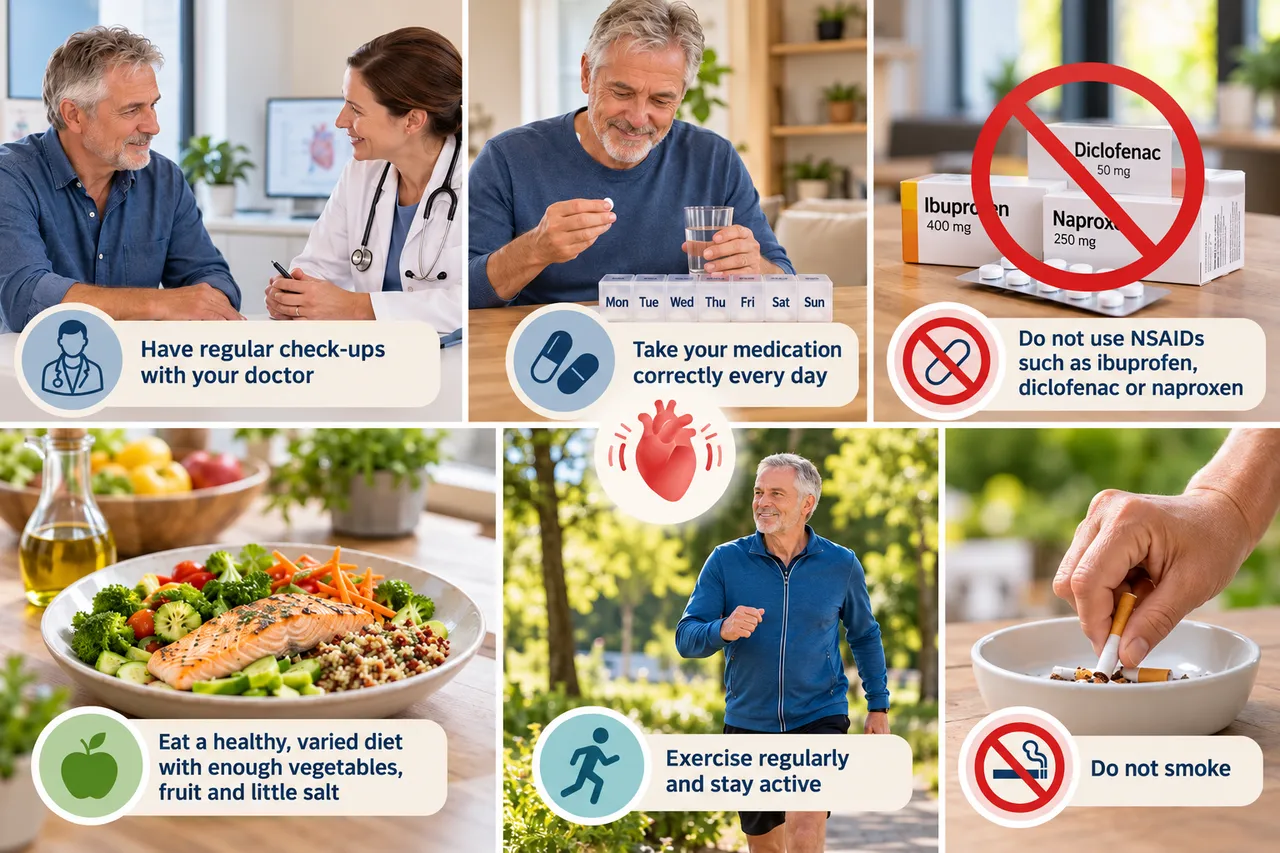
If you have been diagnosed with chronic heart failure, you need to pay attention to a number of things. It is important that you take good care of yourself.
- It is best to monitor a number of things: certain symptoms, your weight, blood pressure, and heart rate.
- Take your medication correctly.
- Live healthily.
- If you have heart failure, it is important to take this into account in your daily life and adjust some activities to what your body can handle.
- Seek help in time if you notice changes or if you experience problems.
Monitor your symptoms closely yourself. Visit your doctor for regular check-ups.
- Go for a check-up with your doctor.
- Have your blood drawn regularly. This is certainly necessary before every appointment with the cardiologist. The doctor will then check your kidneys and important substances in your blood.
- Monitor how you feel at home. Also measure your weight, blood pressure, and heart rate. You can write this down in your heart failure diary. This is very important. Sometimes the hospital also monitors your weight, blood pressure, and heart rate remotely. If these things change suddenly, it may mean that your symptoms are worsening. You may then need to go to the hospital. If changes are detected quickly, your doctor can adjust your treatment sooner and perhaps prevent you from becoming more seriously ill.
- Contact your doctor or heart failure nurse if you have problems.
-
Read more.
Take your medication properly
- Take your medication every day as prescribed by the doctor.
- Never change or stop your medication yourself. Always consult your doctor first.
- Make sure you never run out of medication. Request a new prescription on time and pick everything up from the pharmacy on time.
- Keep your medication list up to date. Have it updated if anything changes. Always take this list with you to the doctor and the pharmacist.
- To be on the safe side, also put a medication list in your wallet or with your identity card. This way, healthcare providers can easily find your medication list if necessary.
- If you do not have a clear medication list , ask your pharmacist or doctor for one.
- Do not use anti-inflammatory drugs such as ibuprofen, diclofenac, or naproxen. If you have a fever or pain, you may take paracetamol tablets up to 3 times 1 gram per day.
- Do not use effervescent tablets. These contain a lot of salt.
-
Read more.
Watch your diet
- Eat a healthy and varied diet. Eat different vegetables and fruits every day.
- Use salt in moderation. You don't need to avoid salt entirely, but don't consume too much of it. Drink when you are thirsty, but don't overdo it. It is usually sufficient to drink 1.5 to 2 liters per day. If you eat too much salt, your body may retain more fluid. This puts extra strain on your heart. Therefore, you should limit your salt intake and avoid drinking too much if you take daily diuretics or if your kidneys are no longer functioning properly. You may drink slightly more on hot days or when you are ill.
- Drink little alcohol. Ideally, do not drink alcohol for at least 2 days a week. It is always better to drink as little alcohol as possible, or even none at all.
- Try to lose weight if you weigh too much.
-
Read more about nutrition.
Read more about how much to drink.
What should you pay attention to in your daily life?
- Get enough exercise. Try to walk or cycle every day. Listen to your body and rest if you feel that something is too difficult.
- Stop smoking if you smoke.
- Get vaccinated against the flu, COVID, pneumonia, and RSV.
- Sometimes you are not allowed to drive. This is especially the case during the first month after a pacemaker or defibrillator has been implanted and during the first three months following dangerous cardiac arrhythmias requiring CPR or a shock. Discuss this with your doctor.
- Working is possible, but sometimes modified work is necessary.
- Sexuality is possible, but listen to your body.
- Travel is possible, but take precautions.
Read more.